Short Answer:
An isolated power supply will alleviate many of the problems caused by a wall wart power supply. You can bypass a lot of headache with power troubleshooting, ground hum, pedal order arrangement, and more with a dedicated, isolated power supply.
Long Answer:
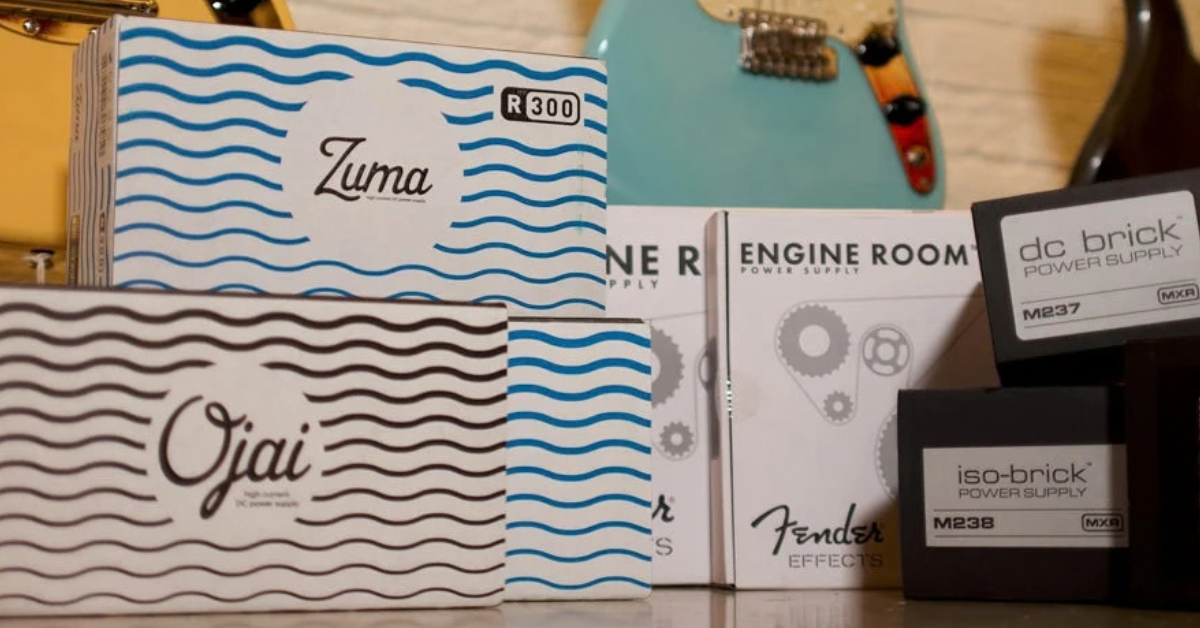
When we talk about an "isolated" power supply, what do we mean by that? Referring to an "isolated" power supply essentially means we're using a supply that has disconnected wall plug and pedal plug components. You can imagine supplies like the Strymon Zuma and Walrus Canvas as these kinds of supplies – removable pedal power plugs, removable wall outlet plug connections, that kind of thing – versus a "wall wart" power supply like a Truetone OneSpot power adapter.
Now, while there's nothing inherently wrong with using a single plug power supply, you do get quite a few advantages from upgrading into an isolated power supply. For one, a dedicated, isolated power supply will alleviate a lot of the headache you might experience when dealing with output power. Isolated power supplies are designed to output pedal power more consistently to each of their outputs. Because of this, there can be less confusion created than with a daisy chain wall wart power supply when it comes to why a pedal in the chain might not be working. An isolated power supply's ability to have its power connections swapped out and tested makes it invaluable for troubleshooting where in your signal a pedal's power may be going wrong.
Additionally, an isolated power supply is designed to transmit "clean" pedal power to your pedals. What this means is that the kind of fluctuations in performance and sound you might get from a wall wart daisy chain power supply are not going to be a problem. While it might seem like a no-brainer to chain up your pedals with a wall wart power supply, it is a real possibility that the direct output of power from your wall socket to your pedals may cause some alteration in tone and performance. Isolated power supplies are also designed to be incredibly portable and adaptable, so getting your pedals from one gig to the next or swapping out a pedal from your signal chain into another are rarely issues.