
Moog Minimoog Model D Analog Synthesizer
44-key, 3-oscillator synth with Fatar keybed, dedicated LFO, and spring-loaded/center deadband pitchwheel Item ID: MINMOOGD0401
Fast & Free Shipping Fast Shipping
Hassle-Free Returns
Independent Since 1960
Musicians Helping Musicians
Couldn't load pickup availability
In our stores
Pairs well with
If you have any questions, you are always welcome to contact us. We'll get back to you as soon as possible, within 24 hours on weekdays.
-
Shipping Information
Use this text to answer questions in as much detail as possible for your customers.
-
Customer Support
Use this text to answer questions in as much detail as possible for your customers.
-
FAQ’s
Use this text to answer questions in as much detail as possible for your customers.
-
Contact Us
Use this text to answer questions in as much detail as possible for your customers.
Description
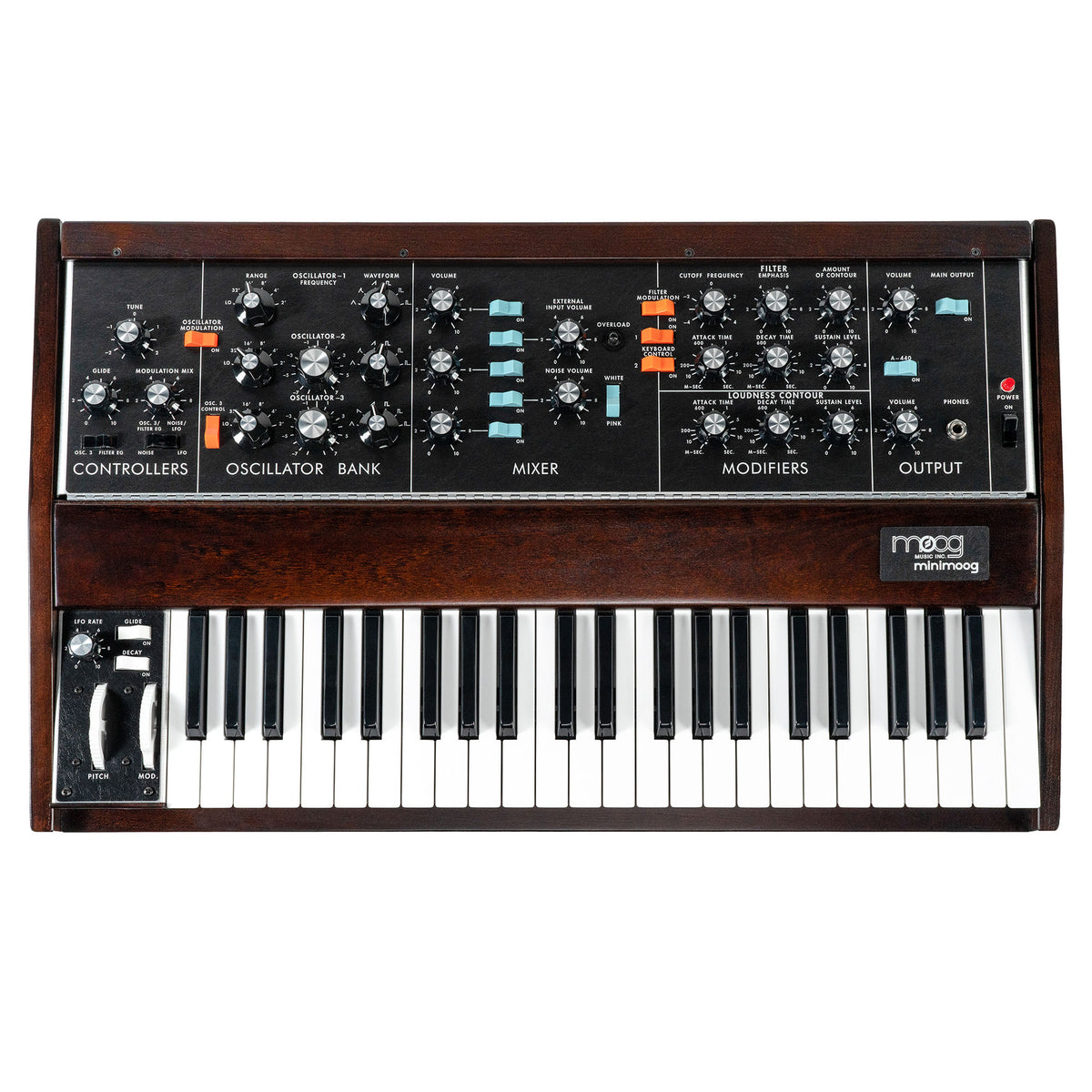
The Minimoog Model D was originally released in 1970 and was the first of its kind. For years, Synthesizers were large, required patching and were exceedingly difficult to travel with. Though these instruments were highly flexible and powerful, Robert Moog decided to invent the first portable Synthesizer to fit the needs of the working musician while including the highly praised architecture of his original Moog modular systems. The MiniMoog was an instant hit and was adopted by legendary musicians such as Bernie Worell, Herbie Hancock, Gary Numan, and many others. Though much simpler, the MiniMoog’s incredible design and sound quality allowed musicians to create and explore extraordinarily complex and unique sounds that had never been heard before.
The Moog Minimoog Model D 2022 Reissue
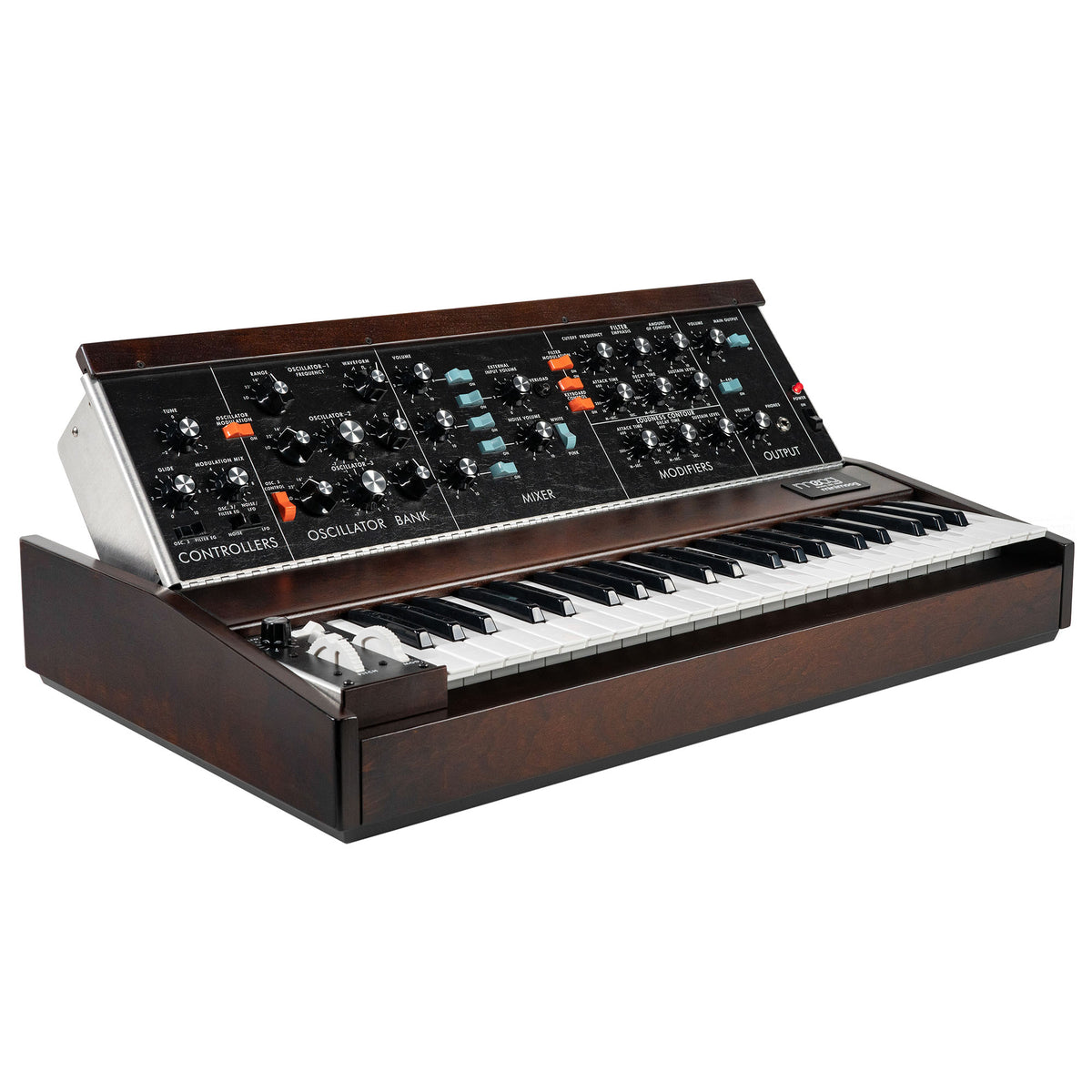
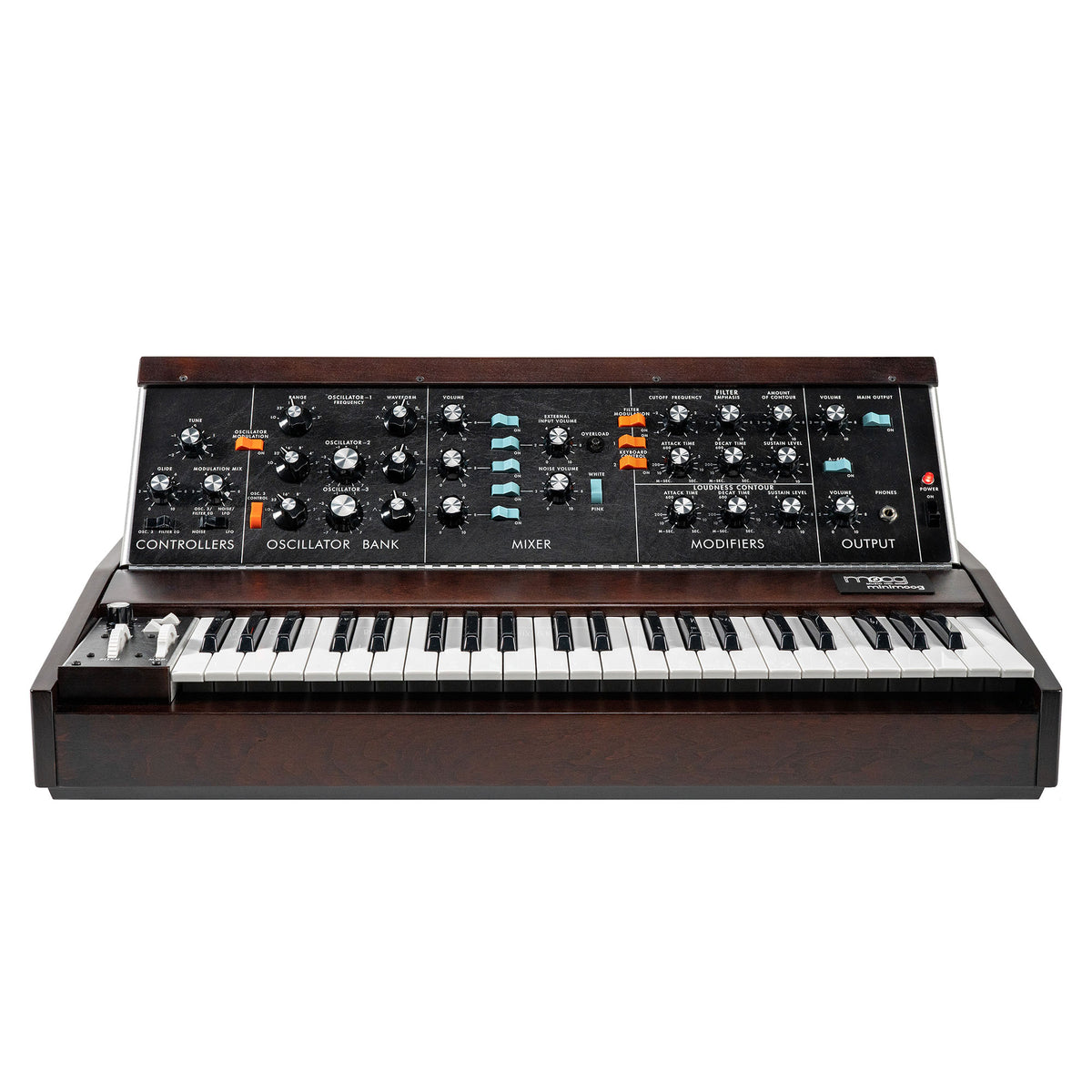
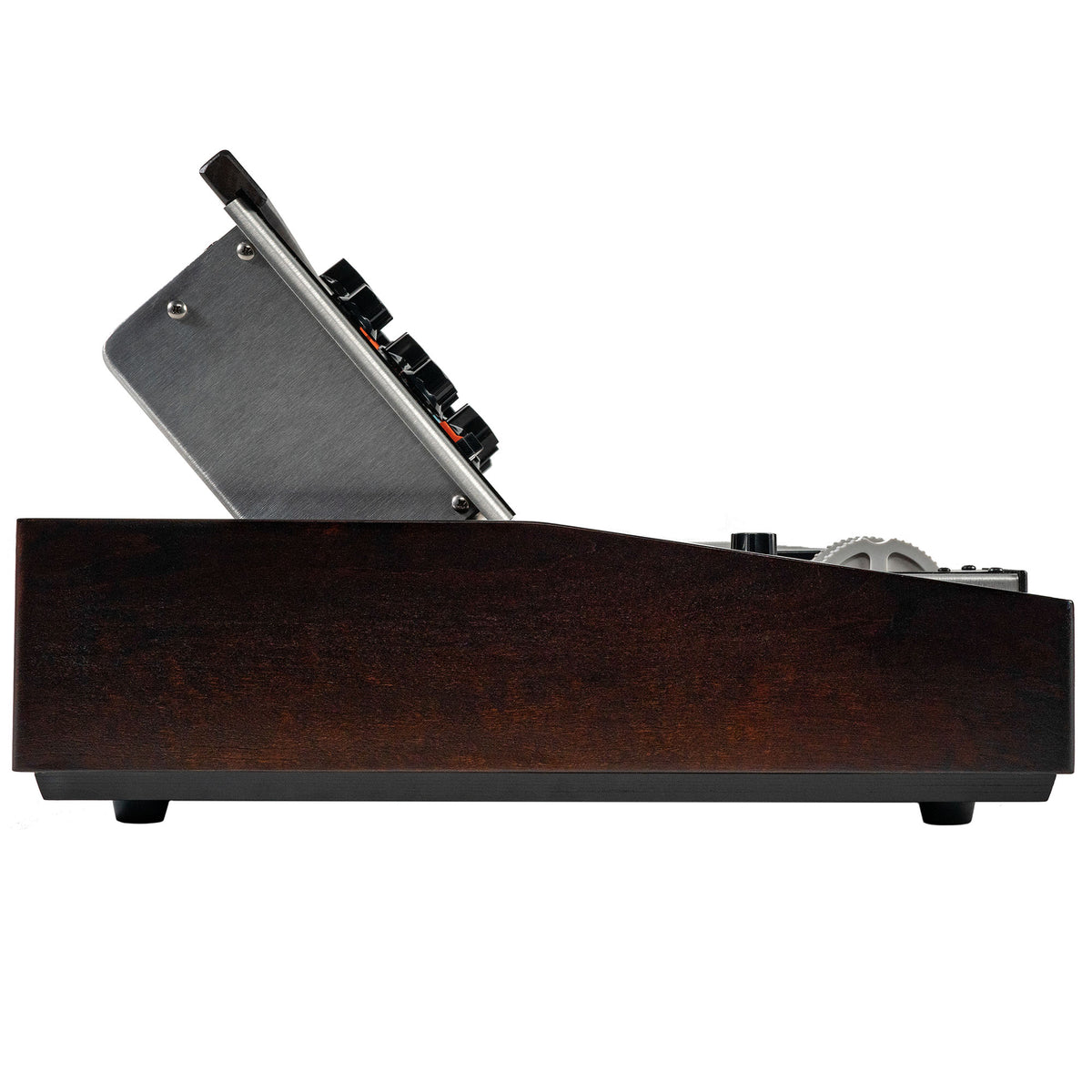
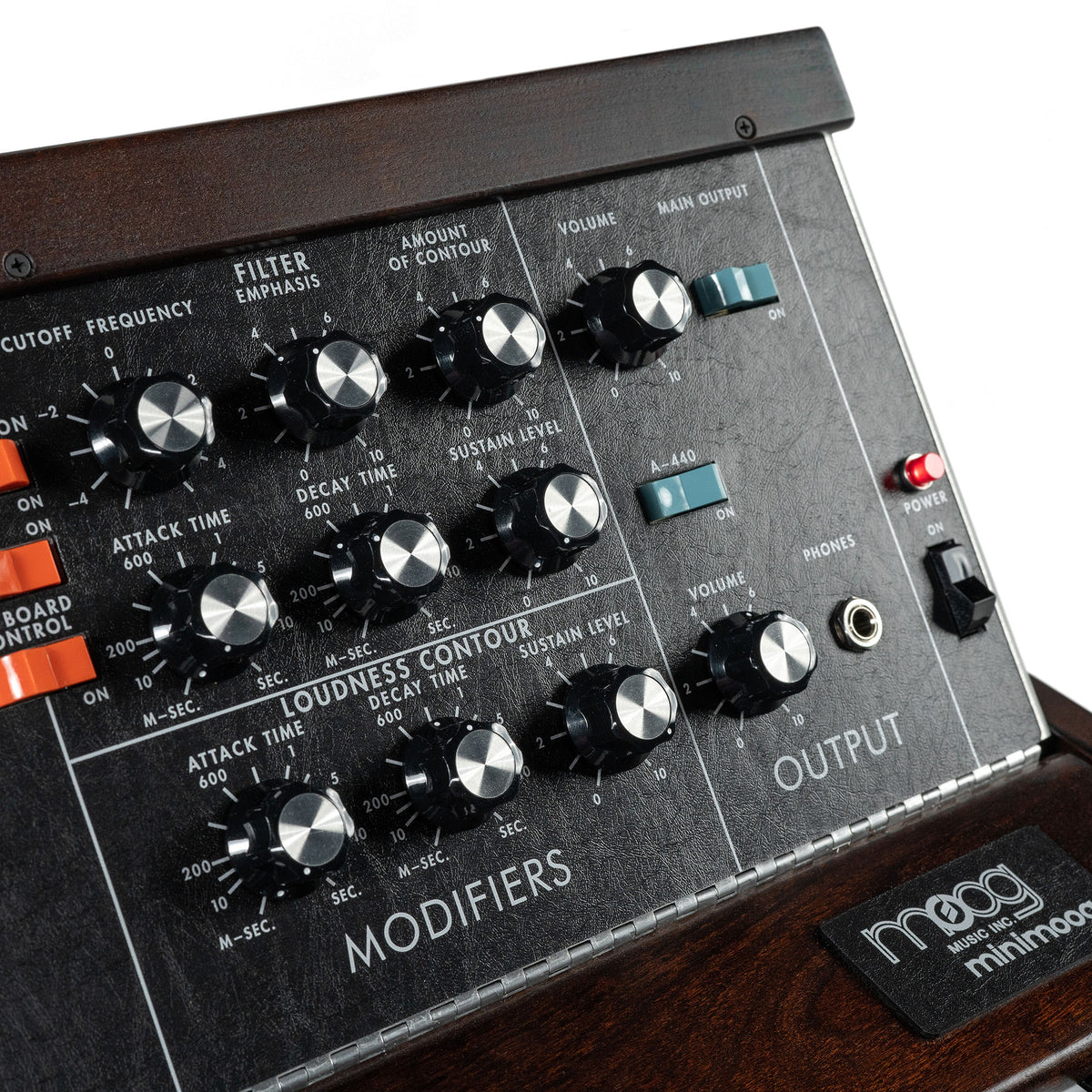
Fast forward to 2022, the MiniMoog Model D is back, after a half-century since its initial invention. Moog kept true to their roots and the signal path and original sound engine are completely intact from the original, down to the through hole design of the 1970’s MiniMoogs. In addition, the synthesizer is housed in a beautiful locally Appalachian sourced cherry cabinet with a hand-finished aluminum chassis.
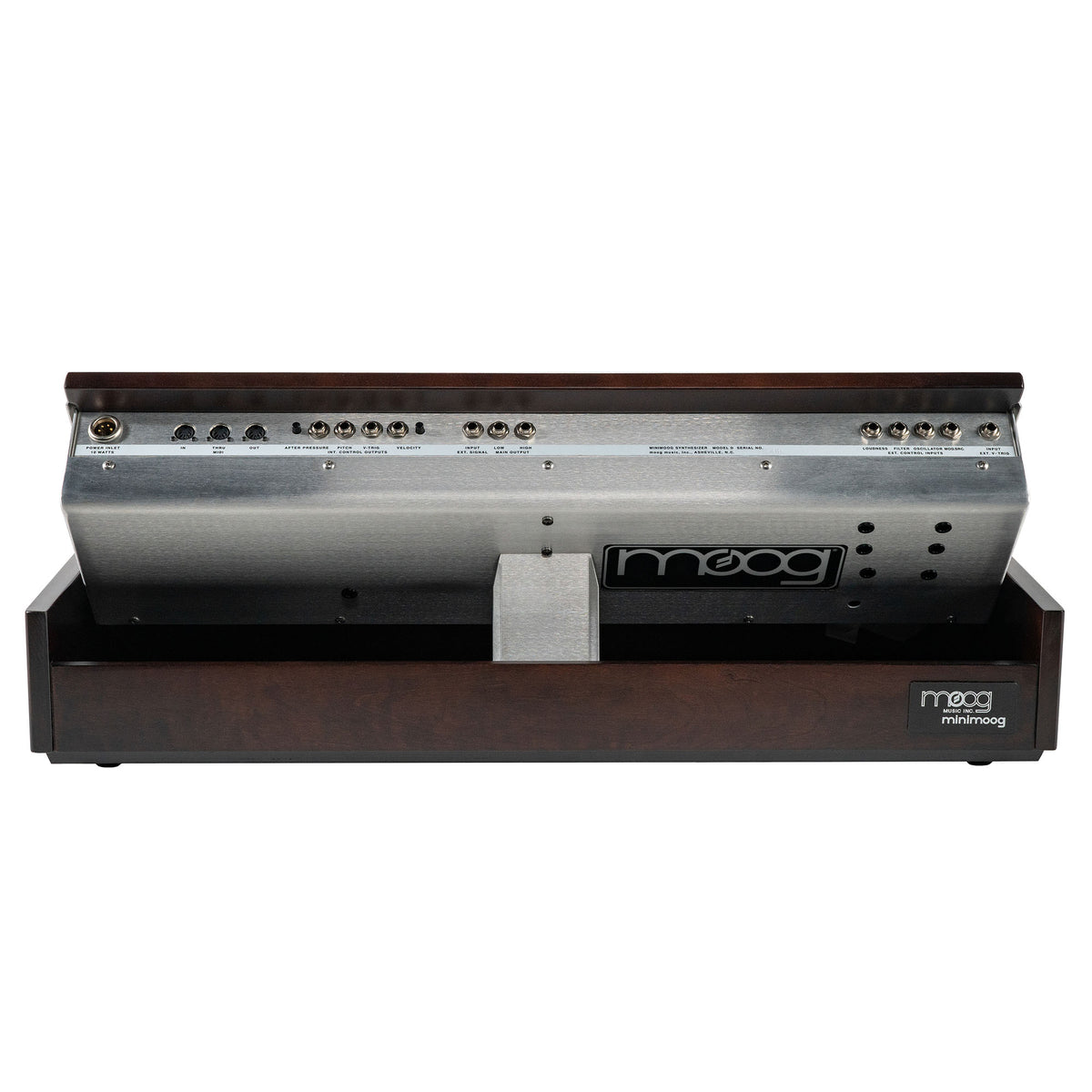
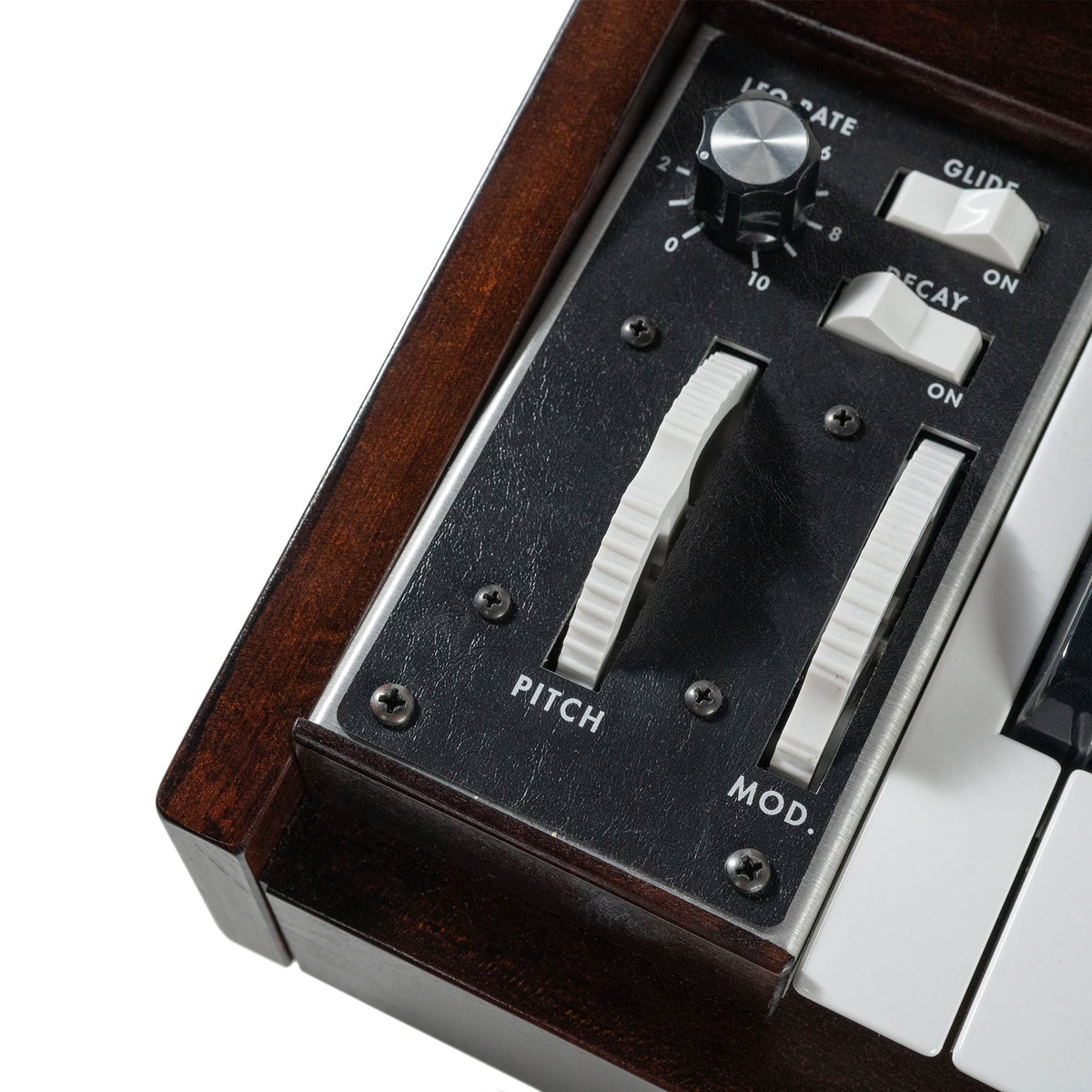
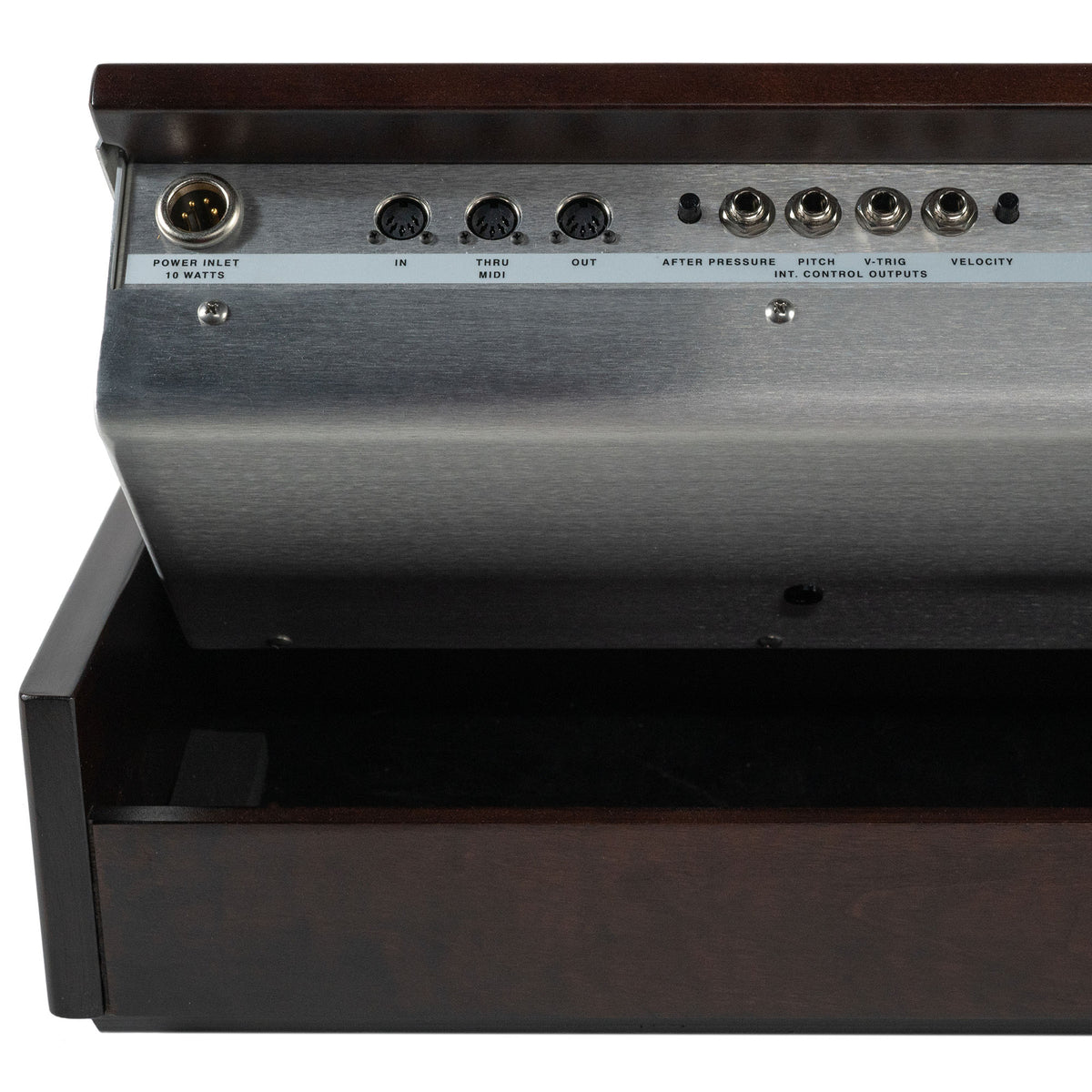
While the classic three-oscillator, low-pass ladder filter and rich saturating mixer section are still intact, Moog did make some small modifications to bring the Model D into the current needs of musicians in 2022. An analog LFO with selectable waveshapes has been added, and the keyboard is a high quality Fatar keybed that offers velocity and after-touch which is available via the CV jacks. In addition, Moog has added full MIDI integration, and an internal mixer feedback mod which eliminates the need for external routing for that classic Minimoog overdrive. Lastly, for the first time ever, the Minimoog Model D is now built using a spring-loaded pitch wheel with a center deadband. A long-awaited request from players that brings an improved user experience while utilizing the pitch wheel. The MiniMoog Model D reissue is a dream come true for collectors and synthesis enthusiasts alike.
Shop Moog Minimoog Model D Analog Synthesizer Accessories:
Also consider checking out related Moog Synthesizers:
Specs
- Number Of Keys
- 44
- Sound Sources
- 3x Oscillators, Noise Generator and External Audio Input
- Oscillator Frequency Range
- 0.1 to 20 kHz (In Six Overlapping Ranges)
- Oscillator Waveforms
- Triangle, Triangle-Sawtooth (Oscillator–1, Oscillator–2), Reverse Sawtooth (Oscillator–3), Sawtooth, Rectangle, Wide Pulse and Narrow Puls
- Noise Generator
- White and Pink
- LFO Rate
- 0.05Hz to 200 Hz
- LFO Waveform
- Triangle (knob down); Square (knob up)
- Filter Type
- Voltage Controlled Low Pass (Ladder Filter)
- Filter Contour Width
- 0 to 4 Octaves
- Pitch Bend Range
- (+/-) 7 semitones (minimum)
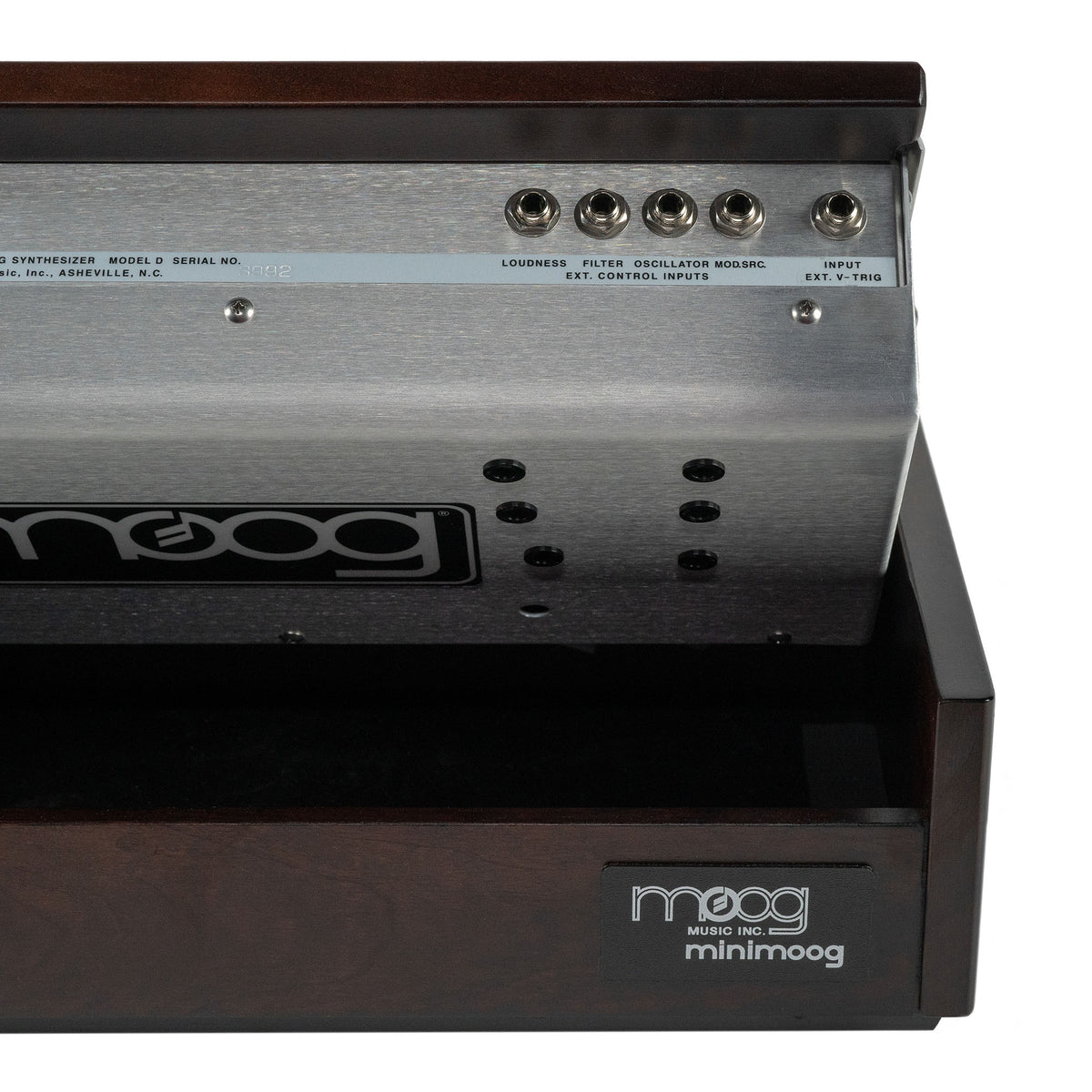
- Loudness Input (¼”TRS)
- 0 to +5 volts; +5 volts = Unity Gain (Works with Moog EP-3 Expression Pedal)
- Filter Cutoff Input (¼”TRS)
- 1 volt per octave of change (Works with Moog EP-3 Expression Pedal)
- Oscillator Pitch Input (¼”TRS)
- 1 volt per octave of change (Works with Moog EP-3 Expression Pedal)
- Modulation Source Input (¼”TRS)
- Ring=Noise Send; Tip=Modulation Receive (This jack makes a normalled connection with no cable present.)
- Trigger Input (¼:TS)
- +5 volt V-Trigger Activates both Contour Generators
- MIDI Input (5-PIN DIN)
- Note On & Note #
- MIDI Output (5-PIN DIN)
- Note On, Note #; Velocity; Aftertouch, Modwheel, Pitch-bend
- MIDI Thru (5-PIN DIN)
- Mirror of the MIDI In signal
- External Power Supply
- Self-switching; 100–240 volts; 50/60 Hz; <12-Watt nominal consumption. (Locking XLR-4 connector.)
- Dimensions (with panel lowered)
- Width: 28.625” / 727 mm, Depth: 17.125” / 435 mm, Height: 5.75” / 146 mm.
- Weight
- 32 lbs. / 14.5 kg.